For decades, the mantra in saltwater fly fishing has been 'reach for the sky,' or rather, 'reach for the longest rod.' The logic was sound: more length meant more leverage, longer casts, and better line control in the wind. But as any seasoned angler who's battled a grander marlin or wrestled a bluefin knows, conventional wisdom often gets a reality check out on the water.
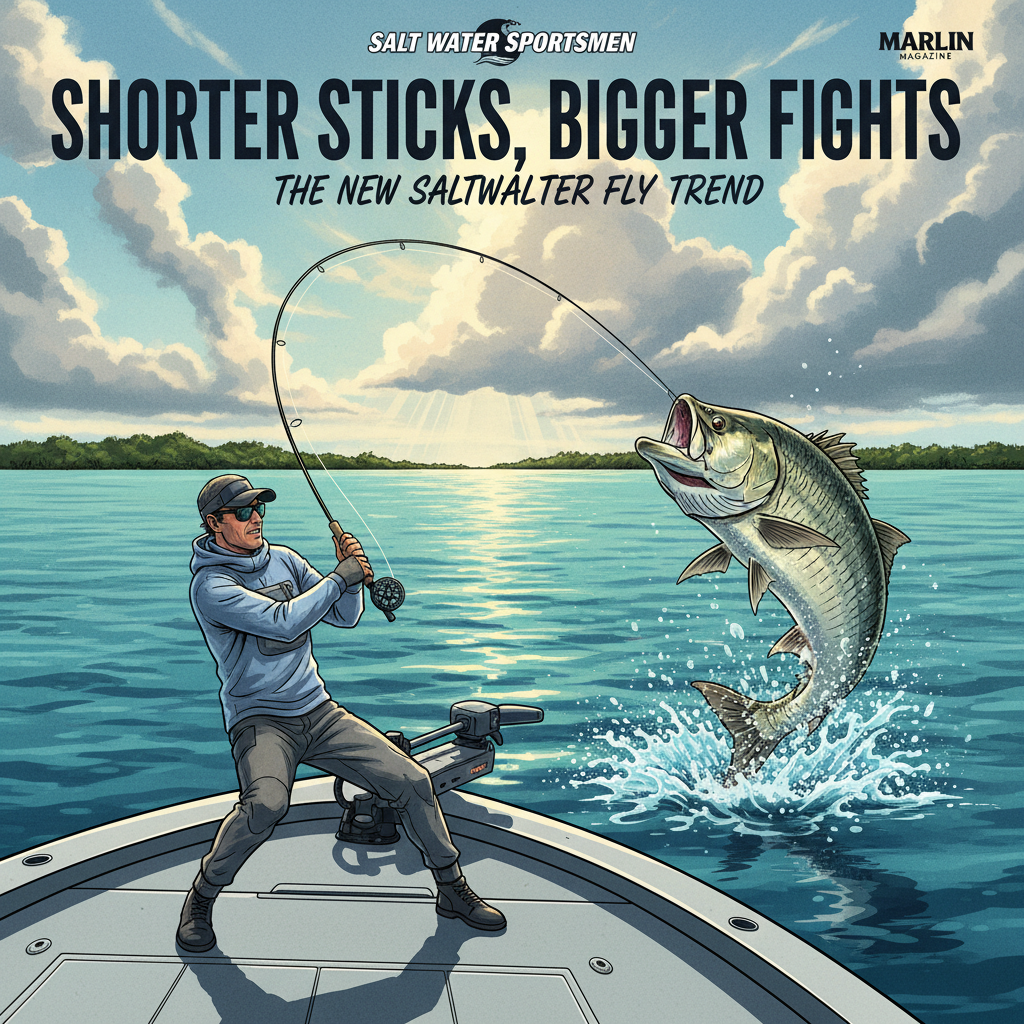
Lately, there’s a quiet revolution brewing, particularly in the shallow-water and nearshore arenas. Elite fly anglers, the kind who chase permit on the flats or tarpon in the backcountry, are increasingly turning to shorter fly rods. We're talking 8-foot or even 7-foot sticks, a departure from the ubiquitous 9-foot standard.
Why the shift? It boils down to a few critical factors. First, accuracy. In tight quarters, whether it’s pitching a crab pattern under a mangrove overhang or dropping a baitfish imitation precisely in front of a cruising cobia, a shorter rod offers unparalleled pinpoint control. Think about it: a shorter lever is easier to manipulate with precision, especially when a mere foot can mean the difference between a hook-up and a spooked fish.
Then there's the fight. While a longer rod might offer more 'shock absorption' on the initial run, a shorter, more stout rod can apply immense pressure more directly. It’s about leverage and power transfer. When you’re trying to turn a bull red from a piling or keep a snook out of the roots, that direct, unyielding power from a shorter blank can be a game-changer. It’s a brawler’s tool, designed for close-quarters combat where every inch of line gained is hard-won. And for those of us who appreciate the engineering of a fine rod, the advancements in blank technology mean these shorter sticks don't sacrifice backbone for their reduced length.
This isn't about replacing your favorite 12-weight for offshore billfish – some battles still demand the reach. But for specific, high-stakes scenarios in the salt, the shorter fly rod is proving to be a surprisingly potent weapon, challenging old notions and opening new doors for precision and power. It's a testament to the continuous evolution of our sport, where innovation, even in length, can lead to more fish and, ultimately, more respect for the resource.