The world of tournament fishing is a constant arms race, a relentless pursuit of the next edge, the subtle advantage that separates the champions from the also-rans. From the meticulous engineering of a Jarrett Bay's hull to the nuanced drag settings on a Penn International, every detail matters. So, when a new piece of tackle hits the market boasting innovation, our ears perk up.
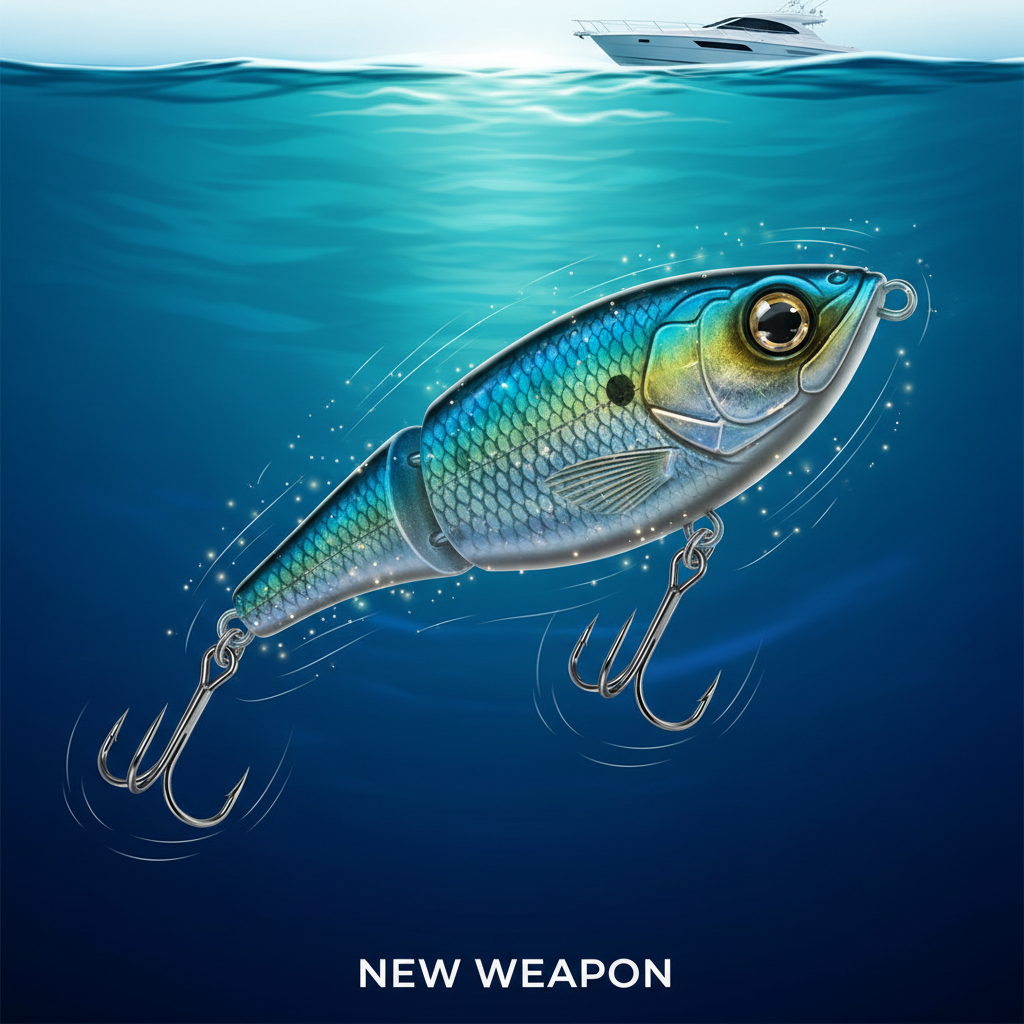
Recently, a 10cm, multi-jointed swimbait with lifelike 3D eyes and what are described as 'sharp hooks' has been making the rounds. While the immediate thought for many offshore anglers might be, 'Another lure for the tackle box,' it begs a deeper look. Could a precisely articulated, sinking swimbait of this size find a niche in the offshore spread, particularly when targeting finicky tuna or even a reluctant wahoo?
Imagine this lure, mimicking a distressed baitfish, swimming naturally behind a dredge or alongside a daisy chain. Its six-section articulation promises an incredibly realistic swimming action, a far cry from the more rigid plugs we often deploy. The 3D eyes, while a common feature, add to the overall realism, potentially triggering that predatory instinct in a fish that's seen every ballyhoo and skirted lure imaginable.
Of course, the true test will be on the water. Will it hold up to the brutal strikes of a blue marlin? Will the hooks, while sharp, be robust enough for the sustained fight? And perhaps most importantly for the conservation-minded angler, how will it perform in a catch-and-release scenario, where quick hook removal is paramount? The IGFA rules are clear, and any tackle that compromises a healthy release is a non-starter.
While this swimbait might not replace the tried-and-true lures that have brought countless billfish to the transom of Vikings and Releases, it represents another potential tool in the ever-evolving arsenal of the serious tournament angler. The pursuit of innovation never stops, and sometimes, the smallest lure can make the biggest difference.