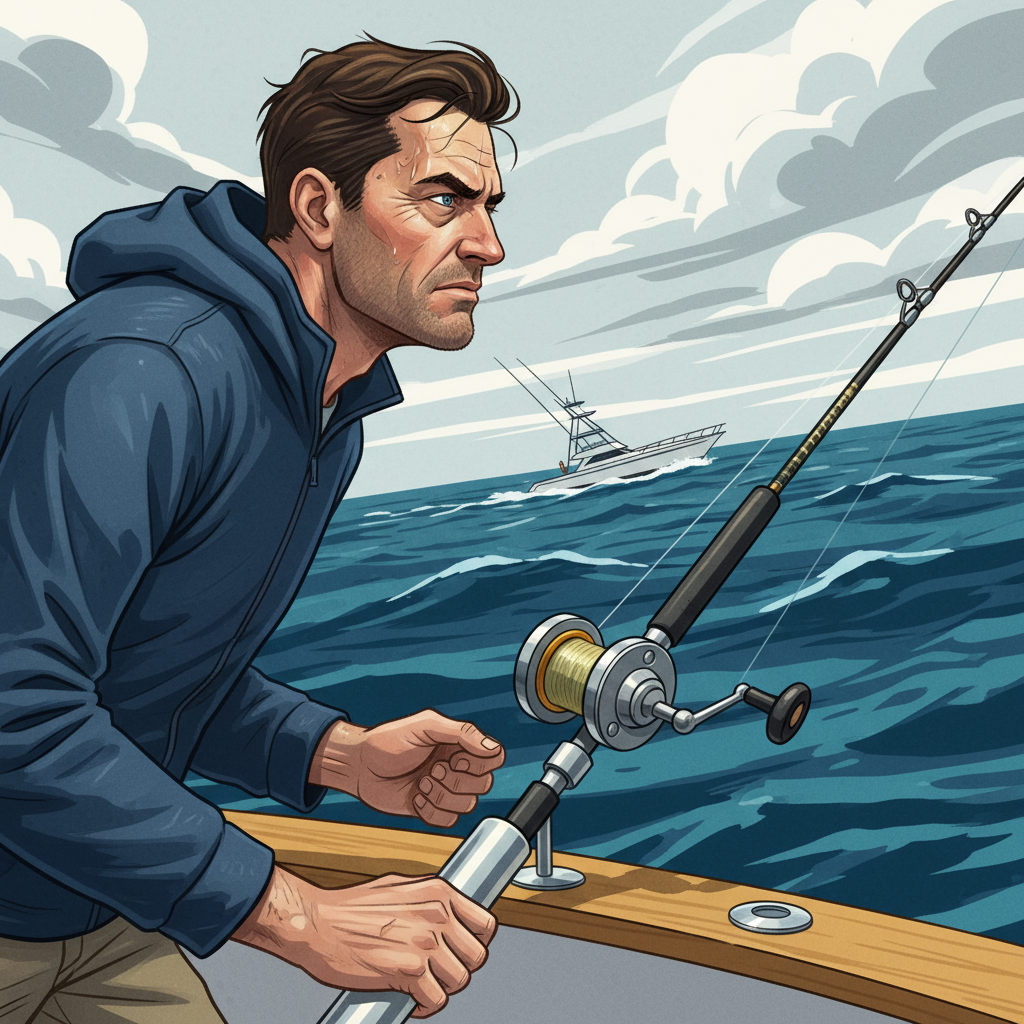
Any seasoned captain worth his salt knows that the ocean speaks in whispers, and one of its loudest is the wind. While the recreational angler might simply note a choppy ride, for those of us chasing glory in tournaments like the White Marlin Open or the Big Rock, wind direction isn't just about comfort—it's a critical piece of the puzzle that dictates everything from spread presentation to bait placement, and ultimately, success.
We've all seen it: a perfectly good fishing day turn sour, or a marginal forecast yield a banner bite. Often, the unseen hand at play is the wind's interaction with currents and structure. A steady easterly, for instance, pushing against a strong north-south current can stack baitfish and create distinct temperature breaks that a Furuno or Simrad chirp sonar will light up like a Christmas tree. That's where your 60-foot Viking or Jarrett Bay can really shine, holding position and working the edge.
Conversely, a hard westerly blowing offshore can push surface water away, drawing up nutrient-rich, cooler water from the depths. This upwelling can concentrate bait and, by extension, the predators we're after—be it a grander marlin or a school of yellowfin. It's not just about the direction, but the duration and strength. A light, consistent breeze from a favorable quarter can create that perfect ripple on the surface, masking your leaders and making your AFTCO-rigged ballyhoo dance just right. A strong, conflicting wind, however, can make maintaining a clean spread a nightmare, tangling your Penn Internationals and Shimano Tiagras, and spooking wary billfish.
Then there's the 'worst' wind. Often, these are winds that lay the ocean flat, making it glassy and exposing every flaw in your presentation. Or, they can be winds that blow directly against a strong current, creating a chaotic, washing-machine effect that scatters bait and makes for an uncomfortable, unproductive day. But even in these conditions, the best crews aboard a Ritchie Howell or a Release will find a way, perhaps by targeting deeper structure with downriggers or focusing on leeward edges.
Ultimately, the wind is just one variable in a complex equation. But understanding its nuances, and how it influences bait, current, and fish behavior, is a hallmark of the top-tier tournament teams. It's not just about having the best gear or the fastest Hatteras; it's about interpreting the ocean's language and adapting your strategy to put those fish in the spread, ready for a clean release and a shot at the leaderboard.